
You’ll create a calm, cozy home by pairing warm neutrals with deep wood anchors and layered natural textures—think linen, nubby wool, woven rugs, and sculptural furniture. Choose multifunctional pieces and concealed storage, add dimmable layered lighting, a few low‑maintenance plants, and restrained terracotta or ochre accents. Edit possessions thoughtfully and place textiles and art so each element breathes, and you’ll end up with a serene, tactile space that feels intentional and lived-in—next, 22 simple ideas to get you there.
Embrace a Neutral Earthy Palette

Start with a foundation of warm neutrals—soft beiges, muted terracottas, and mossy greens—to create a calm, grounded atmosphere that feels lived-in and inviting.
You’ll add accents like sunset ochre for joyful warmth and mossy slate for depth, choosing pared-back furnishings and open sightlines. Keep spaces airy, edges simple, and color intentional so you feel free to breathe and move.
Layer Natural Textures
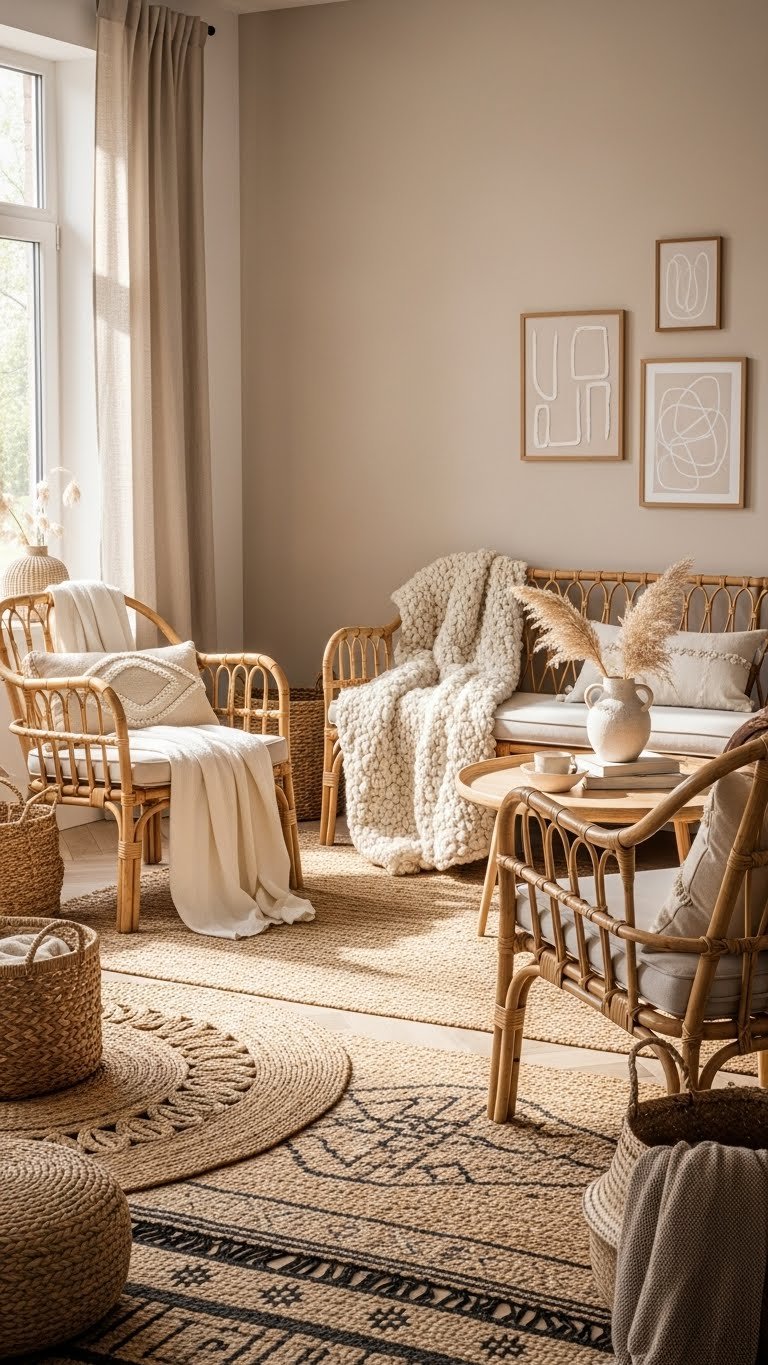
Woven rattan, nubby wool, and raw linen bring a tactile warmth that makes a neutral room feel lived-in and comforting. Layer woven seagrass rugs, a raw linen throw, and textured baskets to create depth without clutter.
Let light reveal grain, knits, and subtle imperfections. You’ll craft a calm, free space where touchable surfaces invite rest and quiet exploration.
Choose Sculptural Furniture Pieces
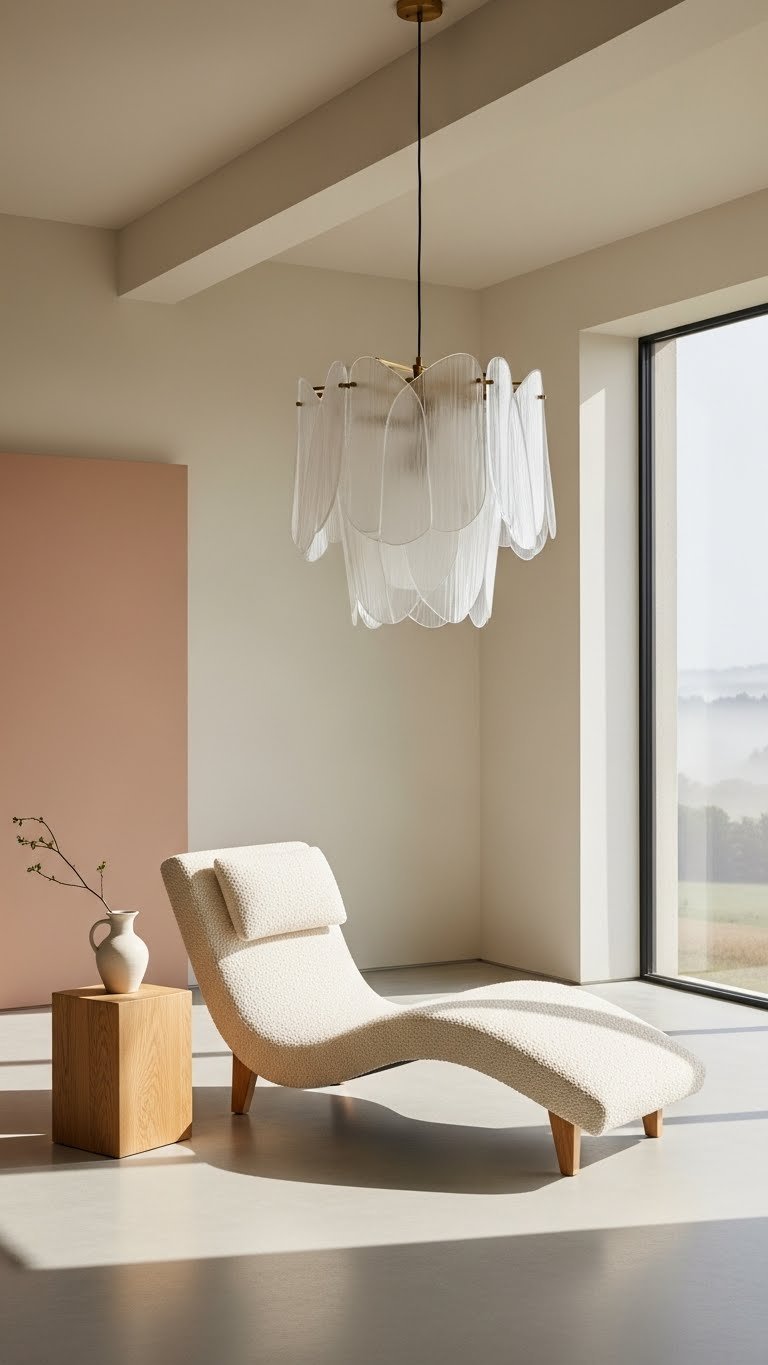
Choose one or two sculptural furniture pieces to anchor a room and give your minimal scheme a confident focal point.
You’ll pick forms that breathe — a sculptural lighting pendant, an armless lounge, or curved shelving that doubles as art.
Keep lines clean, materials honest, and scale generous so each piece feels liberated, purposeful, and able to define calm without clutter.
Incorporate Warm Metallic Accents

Introduce warm metallic accents to lift a minimal palette and bring subtle glow without stealing the room’s calm. You’ll add vintage brass knobs, a slim lamp, or a tray of hammered copper to punctuate texture and warmth.
Let small, chosen pieces catch light, reflect mood, and invite touch. These touches feel liberated, intentional, and quietly luxurious without overwhelming the space.
Prioritize Multifunctional Furniture
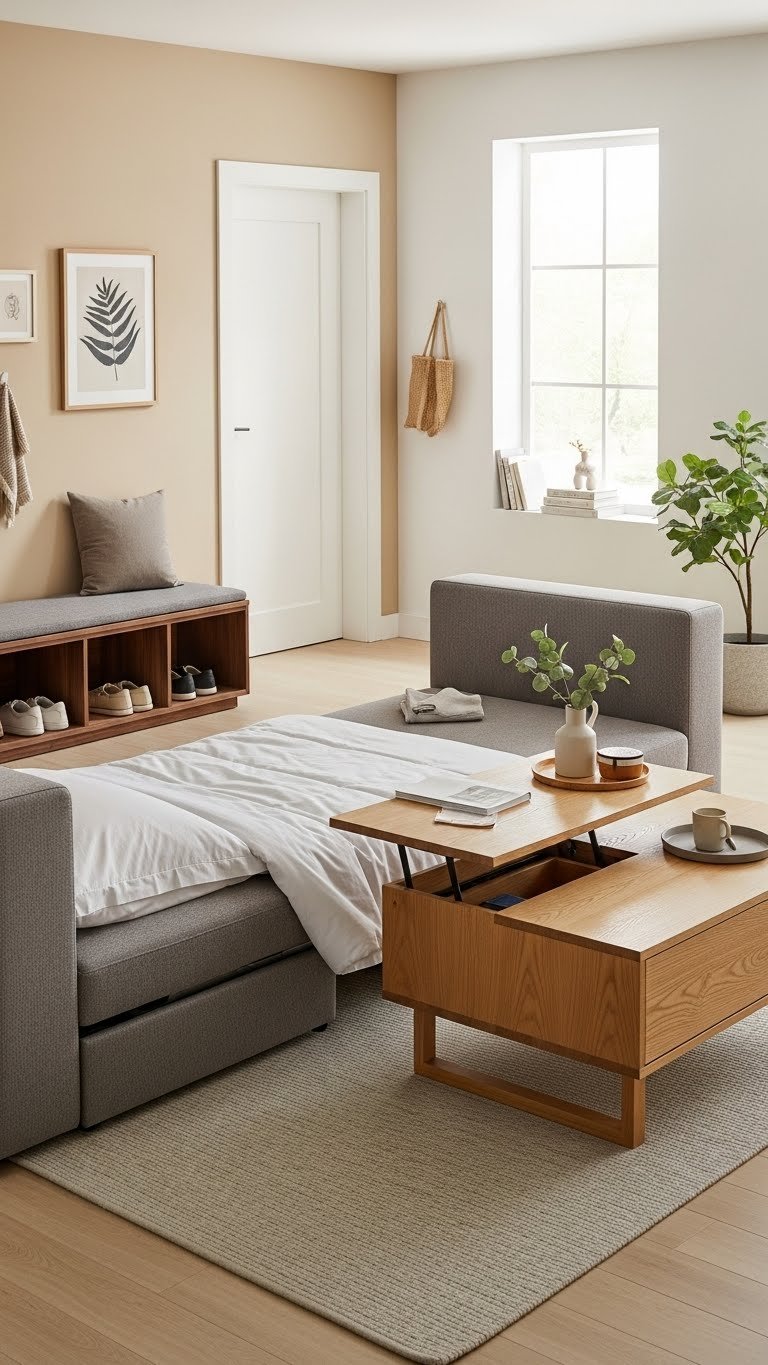
Maximize space and function by picking furniture that does double duty: a sofa that converts to a guest bed, a coffee table with hidden storage, or a bench that’s both seating and a shoe cubby.
You’ll choose space saving sofas and sleek convertible tables that free movement, reduce clutter, and let you live lightly.
Each piece feels purposeful, calm, and liberating—room to breathe.
Add Nubby Linens and Soft Throws
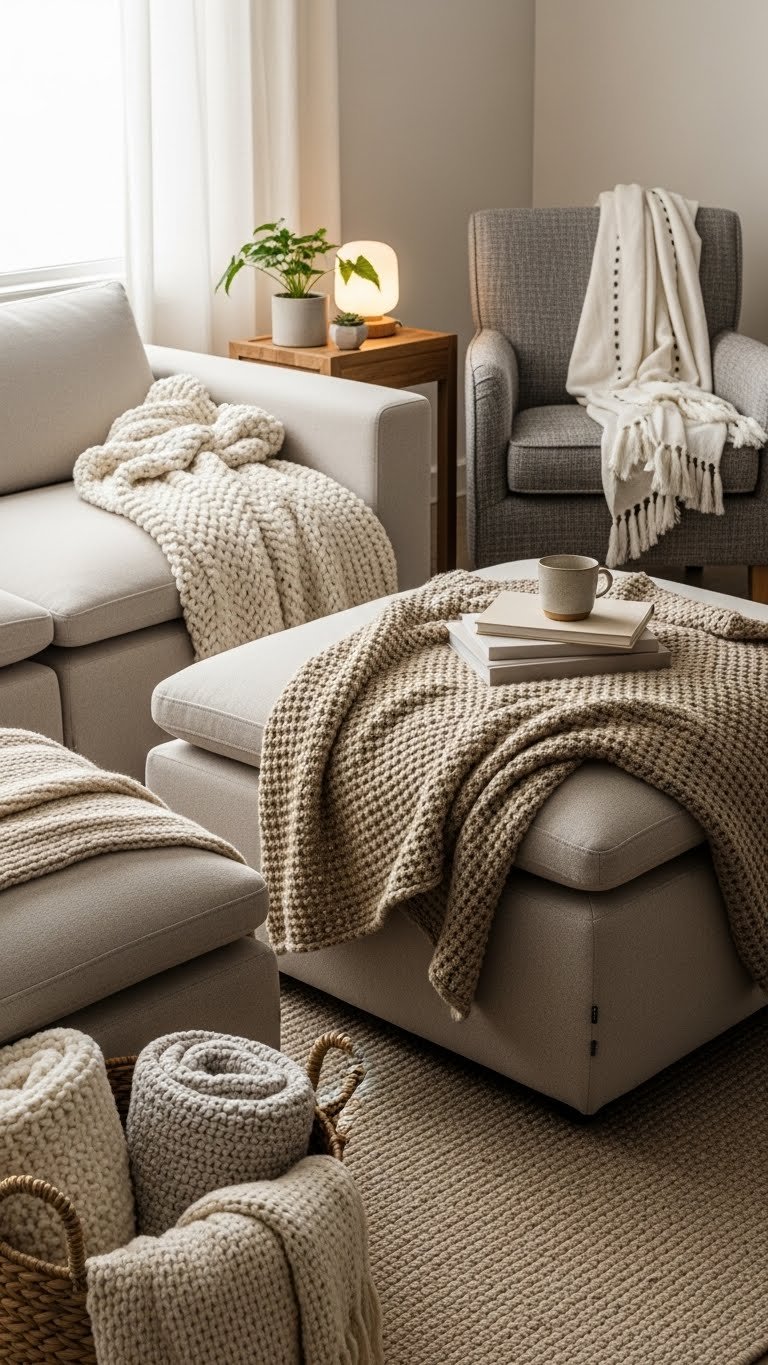
Once your furniture is doing double duty, soften the room with nubby linens and plush throws that invite you to sit and stay a while.
Choose neutral tones, tactile weaves, and pieces with subtle hand stitched details that feel artisanal. Drape throws casually, mix textures for ease, and follow simple linen care to keep freedom-loving fabrics relaxed, resilient, and ready for languid afternoons.
Use Raw Wood and Reclaimed Materials

Bring in raw wood and reclaimed pieces to anchor the room with honest texture and history.
You’ll choose items with patina stories visible in knots, stains, and faded paint, letting toolmarks texture remind you of hands and time.
Mix reclaimed beams, a simple table, or shelving to ground minimal spaces; they free you with character, resilience, and quiet authenticity without fuss.
Opt for Rounded Edges and Organic Shapes

Anyone can feel more at ease in a room softened by rounded edges and organic shapes; they calm sightlines, encourage movement, and invite touch.
You’ll choose furniture with curved silhouettes, rounded mirrors that reflect soft light, and pebble poufs for casual seating. These forms strip rigidity, open pathways, and let you float through spaces with ease, freedom, and quiet confidence.
Create Calm Corners With Minimal Accessories

When you pare a corner back to just a few thoughtful pieces—a low lamp, a single vase, and a soft throw—you give the eye room to rest and the body space to breathe.
You craft a soft vignette that invites pause: muted textures, one green stem, and a quiet vignette of light. It feels spacious, intentional, and utterly freeing.
Introduce Subtle Patterned Accents

If you want to keep calm while adding interest, introduce small-scale patterns in restrained doses: a linen cushion with a thin stripe, a rug with a soft geometric repeat, or a ceramic bowl with a delicate dotted glaze.
You’ll favor tone on tone palettes and micro geometrics that whisper rather than shout. Let subtle rhythm guide visual flow, keeping spaces open, airy, and free.
Bring in Biophilic Elements and Plants

After you’ve settled on quiet patterns, bring in biophilic elements and plants to deepen that sense of calm. You’ll add life with air purifying houseplants, sculptural palms, and simple succulents that ask little but give much.
Mount moss art for soft texture and visual rest. Let greenery frame windows, drift through corners, and free your space without clutter or fuss.
Select High-Quality, Sustainable Materials
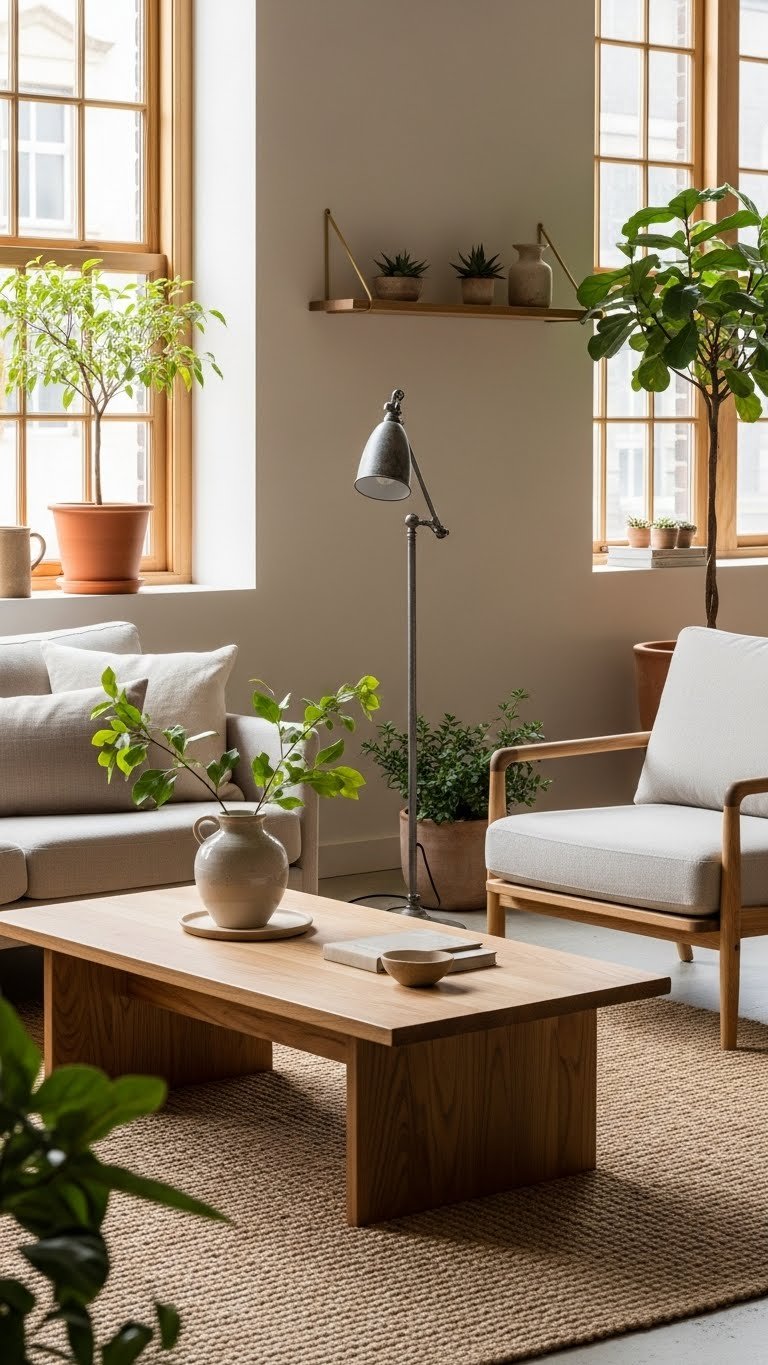
Because cozy minimalism lasts when it’s built to last, choose high-quality, sustainable materials that age gracefully and feel good to the touch. You’ll favor timber and stone with plant based finishes, metals with honest patina, and responsibly made pieces.
Prioritize ethical sourcing, low-impact production, and durable craftsmanship so your space feels free, grounded, and ready for a life well lived.
Balance Cozy Fabrics With Clean Lines

While clean lines keep a room feeling calm and spacious, cozy fabrics add the touch that makes it livable—soft wool throws, brushed-linen cushions, and plush rugs layered against minimalist silhouettes.
You’ll create tactile contrast by pairing textured textiles with sleek furniture, letting geometric balance guide placement.
Embrace restraint: one or two cozy elements per space, arranged to free movement and invite slow, unstructured relaxation.
Curate a Limited Color Pop (Mustard, Terracotta, Olive)
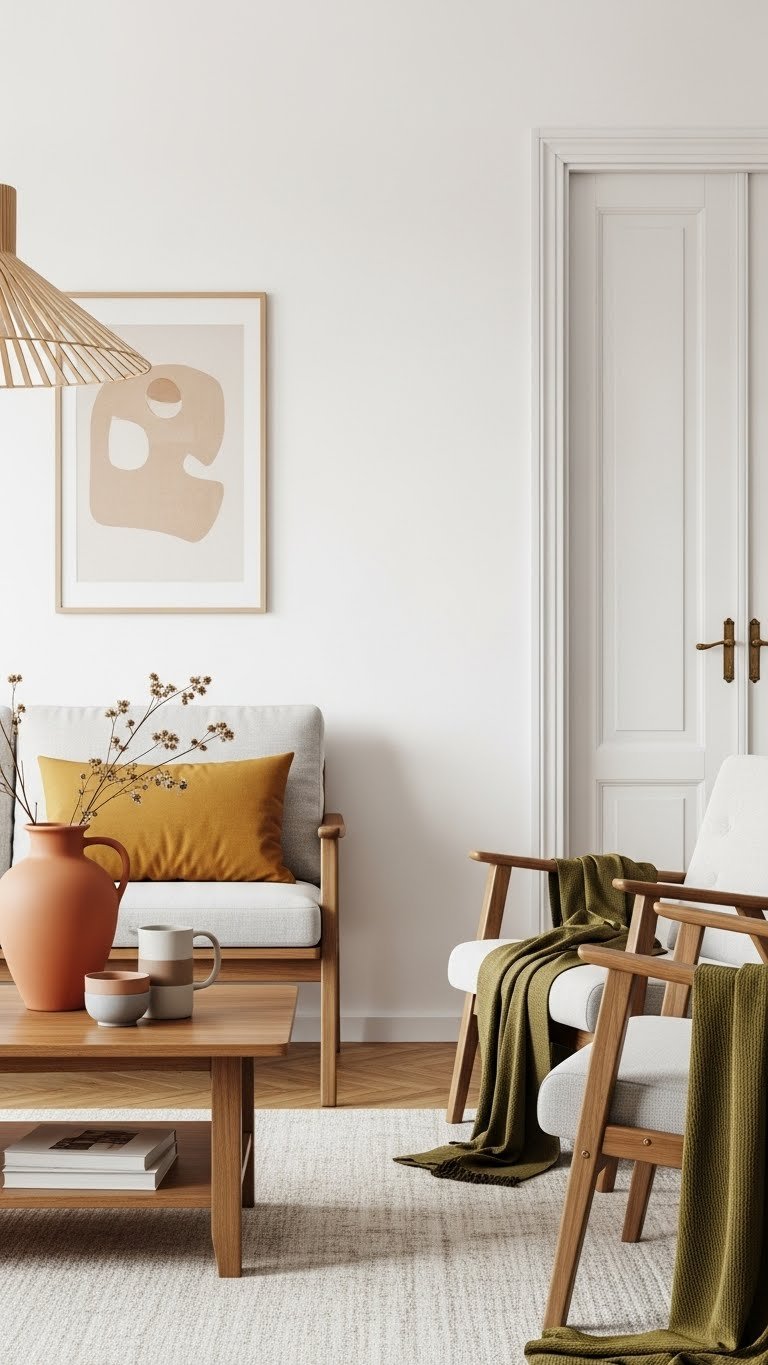
Bring a single warm accent into a neutral room to make the whole scheme sing: mustard, terracotta, or olive will cut through white-and-wood minimalism without overpowering it.
Choose mustard accents sparingly—a cushion or throw—pair terracotta vases with muted ceramics, and layer olive textiles for depth. You’ll create calm contrast that feels free, intentional, and quietly joyful.
Layer Lighting for Warmth and Ambience

With a few layered light sources, you’ll turn a neutral room into a cozy, lived-in retreat: combine soft overhead dimming, warm-toned bedside or floor lamps, and a couple of low-glow accents like string lights or candles to create depth without clutter.
Add dimmable sconces for reading nooks and layered pendants over dining or workspace areas—mix heights and warmth to make the space feel free, calm, intentional.
Display Imperfect, Artisan Ceramics

When you place a hand-formed mug or uneven vase on a shelf, its small irregularities tell a quiet story and instantly warm a minimal room.
You choose pieces with handmade glaze and asymmetrical silhouettes to celebrate imperfection.
Let one or two ceramics anchor a surface, give tactile contrast to clean lines, and remind you that freedom includes slow, joyful selection and slow-made beauty.
Keep Storage Simple and Concealed
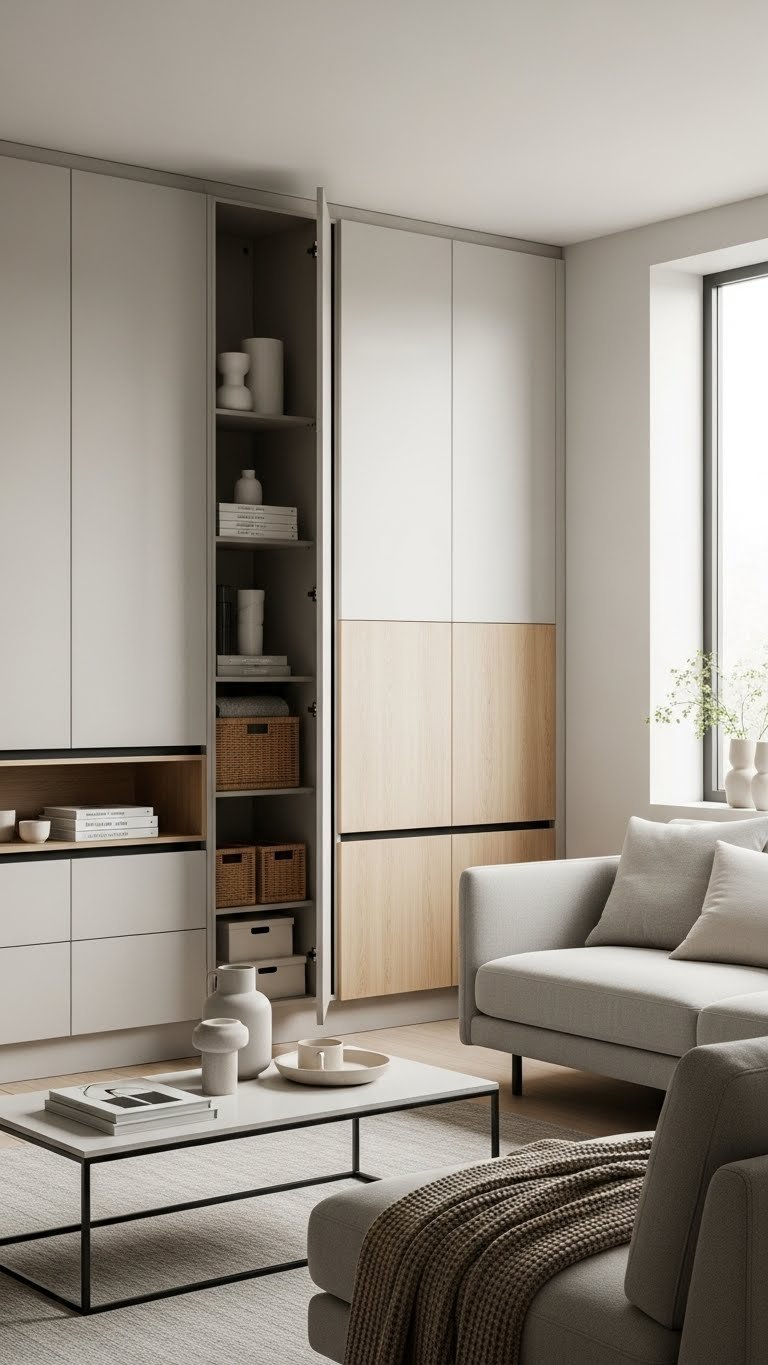
Your home’s hidden corners should feel calm, not chaotic, so tuck belongings behind smooth doors and into shallow drawers that keep surfaces clear.
You’ll lean into hidden baskets and recessed cabinets to streamline daily life, letting essentials vanish yet stay reachable.
Choose muted textures, uniform containers and open breathing space; simplicity frees you to live with clarity, ease and intention.
Combine Retro Minimalism With Modern Pieces

After you’ve cleared surfaces and concealed clutter, let a few vintage silhouettes and muted modern pieces play together to give the space personality without noise.
You’ll mix tactile vinyl accents, a curved lamp, and lean-lined furniture to keep rhythm. Choose pieces that breathe, photograph light, and invite movement. That restrained contrast lets your home feel liberated, personal, and quietly intentional.
Use Soft Whites and Warm Beiges as Backdrops

A soft white or warm beige becomes the quiet stage that lets every texture and silhouette sing, so choose hues that reflect light without washing detail away.
You’ll use soft neutrals to expand space, invite calm, and let curated objects breathe. Lean into warm undertones for subtle warmth that doesn’t demand attention, creating freedom to rearrange, edit, and live lightly.
Add Deep Wood Accents for Grounding

Think of deep wood accents as the anchor that keeps a light, neutral room from feeling floaty; they add weight, warmth, and a quiet sophistication.
You’ll introduce aged timber pieces—a reclaimed bench, a low table—to ground airy textiles. Choose walnut accents for contrast: slim frames, a floating shelf, or cabinet fronts that root your space while keeping lines clean and open.
Edit Decor for Purposeful Simplicity
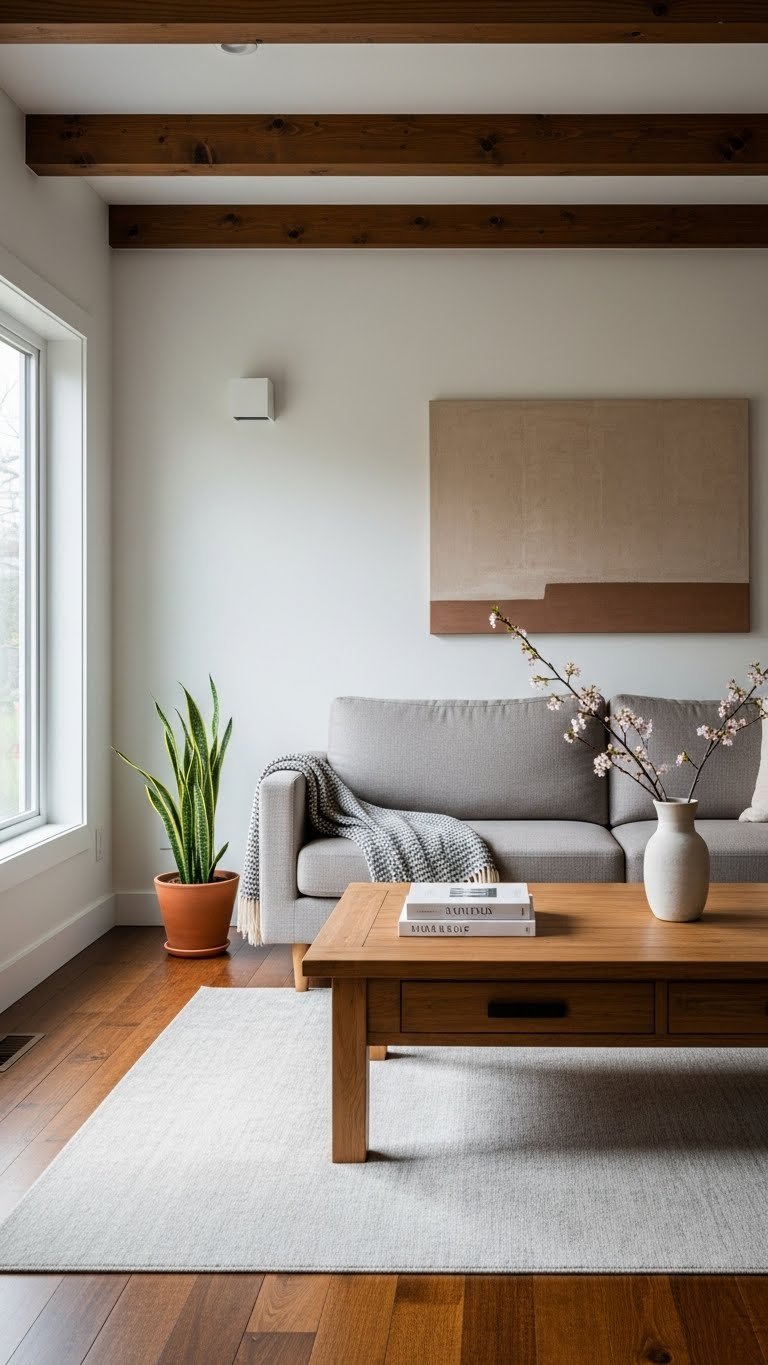
Let the warmth of deep wood guide what stays and what goes—when you pare back, each piece earns its place and purpose.
You’ll do a functional edit: keep items that serve daily life or spark calm, remove excess, and choose objects that let air and light move freely. Mindful decluttering frees space and mind, giving you room to live lightly and fully.
Introduce Statement Textiles in Muted Stripes
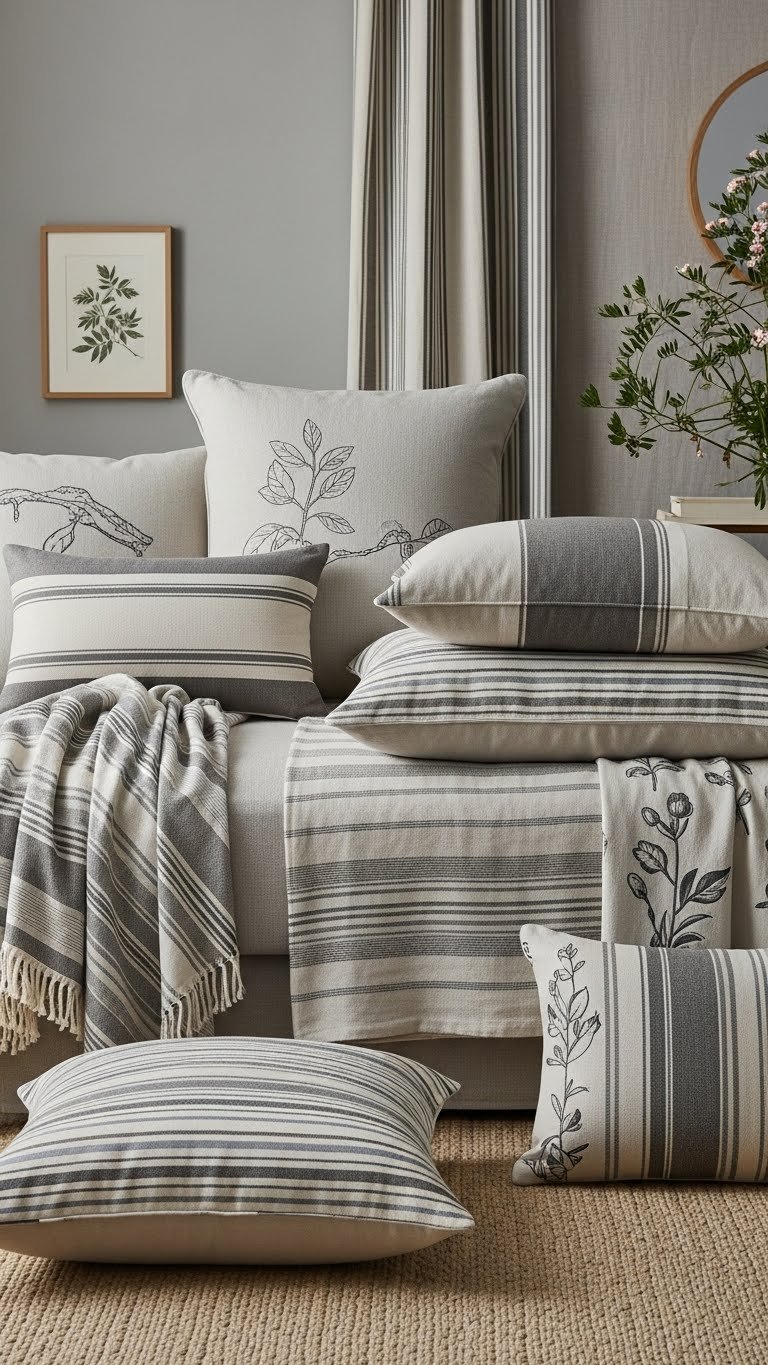
When you layer muted stripes in linens and wool, they anchor the room without shouting, bringing gentle rhythm to the pared-back palette.
You’ll mix mismatched scale—wide throws with narrow pillow bands—to create movement, then pair them with subtle botanical motifs for warmth.
Choose restrained colors, natural textures, and deliberate placement so each textile reads like a bold, calm statement that frees your space.